Bringing Ideas to Life with Stick Figure Graphics
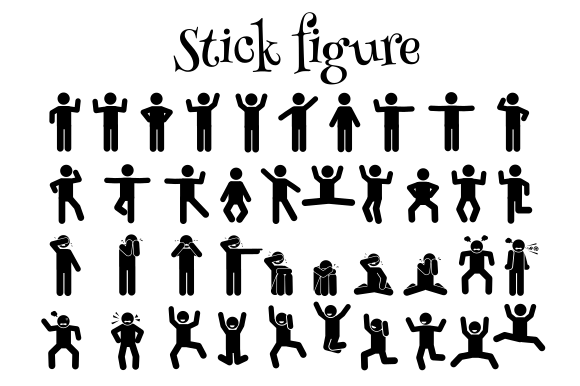
In the world of visual communication, clarity and simplicity often hold the greatest power. A Stick Figure, in its most refined form, is not a rudimentary sketch but a versatile graphic element designed for modern creative workflows. These graphics capture a spectrum of poses, actions, and expressions, serving as a foundational visual asset that adds creativity and immediate appeal to projects ranging from corporate infographics to personal blog illustrations. They act as a universal language, bypassing complex details to convey concepts directly and effectively.
The Role of Stick Figures in a Creative Process
Where exactly do these graphics fit into a broader process? For many professionals and creators, the initial stages of a project involve ideation and structure. A Stick Figure package provides ready-made visual components that can be deployed during the planning phase to map out user journeys in a website mockup, illustrate steps in a training manual, or create quick storyboards for a presentation. Their use isn't confined to the beginning; they can be integrated during the execution phase to fill visual gaps, or after the core content is built to enhance and clarify the final product.
This flexibility means they interact seamlessly with other tools and decisions. A marketer might combine these figures with data charts in Adobe Illustrator to create a compelling infographic. An educator could import them into a slide deck alongside text and photographs to explain a process. Their simplicity ensures they do not compete with more complex assets but rather complement them, providing visual anchors that guide the viewer’s understanding.
Unlocking Scalability with Vector File Formats
The true practical value of a professional Stick Figure collection lies in its technical delivery. Each package includes a convenient ZIP file containing high-quality vector EPS and SVG files. This choice of format is critical for workflow integration. Vector graphics are defined by mathematical paths, not pixels, which means they offer infinite flexibility and scalability. Whether you need a tiny icon for a mobile app interface or a large, bold figure for a poster, you can resize these assets without any loss of sharpness or quality. This eliminates a common pain point: the need to source or create multiple versions of an image for different outputs, ensuring consistency and saving considerable time.
Preparing and Accessing Your Assets
Effective use starts with proper preparation and organization. To integrate these files into your environment, follow a straightforward process:
- Download the ZIP file to your designated project or asset folder on your computer.
- Extract the contents using your operating system’s built-in tools or software like WinZip or 7-Zip.
- Locate the extracted files. You’ll typically find both EPS and SVG formats organized, ready for use.
- Choose the file format based on your immediate design requirements and software compatibility. SVG is widely supported by modern web design tools and software, while EPS is a long-standing standard for print-focused applications like Adobe Illustrator or CorelDRAW.
Keeping these extracted files in a well-structured library, perhaps categorized by theme or pose, pays dividends in long-term efficiency. When a future project demands a specific visual, you can quickly locate and deploy it without starting a new search.
Customization and Integration into Your Workflow
Once the file is selected, the next phase is customization and implementation. Import the chosen vector file into your preferred design software. Here, the vector nature shines again. You can effortlessly modify colors to match your brand palette, adjust line weights, or even combine individual figures to create new scenes. This adaptability allows the Stick Figure to serve diverse use cases: a single figure can be colored blue for a corporate tech blog, or given a more vibrant palette for a children’s educational resource.
The final step is seamless incorporation. Integrate the customized figures into your designs. Their clean lines ensure they blend well with other elements. Use them to break up text-heavy website content, to create intuitive flowcharts in a business process document, or as engaging characters in an animated explainer video prototype. For freelancers and small business owners, this represents a quick way to elevate client deliverables without investing hours in custom illustration.
Practical Considerations for Quality and Efficiency
A few practical observations can streamline your use. First, consider compatibility: ensure your team or collaborators use software that can handle the vector formats you’ve chosen. Second, for usability, start by using the figures in their default state to establish a baseline visual style, then apply customization systematically across a project to maintain visual cohesion. This approach aids in quality control, ensuring that all graphics share a common professional aesthetic.
Furthermore, think beyond the immediate project. These vector assets are reusable. Building a personal or organizational library of such graphics promotes efficiency over time. An entrepreneur might use the same set of figures for a pitch deck, a social media campaign, and an internal training module, creating a recognizable visual thread across all communications.
From Concept to Finished Creation
Ultimately, a Stick Figure graphic package is more than a collection of images; it is a tool for execution. It fits into the practical reality of deadlines, software constraints, and creative demands. By providing scalable, editable, and high-quality assets, it removes barriers between an idea and its visual representation. Whether you are a blogger looking to make your posts more engaging, a publisher needing clear illustrations for a book, or a productivity-minded user aiming to communicate complex information simply, these graphics offer a path to enhance your visual creations directly and effectively. They help bring ideas to life with a touch of creativity, while grounding the process in the practicalities of modern design work.