SaaS and Cloud Software: The Digital Backbone for Modern Creativity
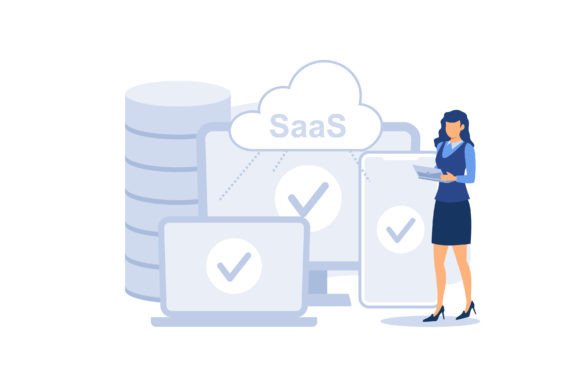
Let’s talk about the tools that power your work without you ever having to think about them. SaaS and cloud software on computers represent a fundamental shift in how we access, use, and manage software. Rather than a CD-ROM or a downloadable executable file, these applications live on remote servers—the “cloud”—and are delivered to you over the internet, on-demand. Think of it like subscribing to electricity for your home instead of owning and maintaining your own generator. It’s software as a service, a utility that is always up-to-date, accessible from any device, and scales effortlessly with your needs.
The Visual Language of Cloud-Based Tools
From a designer’s perspective, the interface and identity of SaaS and cloud software often carry distinct visual characteristics. They tend towards clean, minimalist aesthetics—often employing modern sans serif typefaces—to convey clarity, efficiency, and reliability. Their personality is professional yet approachable, built on trust and seamless functionality. Icons are simple and intuitive; color palettes frequently use blues and whites to evoke a sense of openness and digital space, but also bold accent colors for interactive elements. The overall appeal is one of frictionless empowerment. You’re not wrestling with software installation; you’re logging into a workspace that’s ready to go.
Where Cloud Software Thrives: From Ideation to Publication
The true strength of SaaS platforms is their ubiquity across the creative workflow. For a blogger or content creator, it might be the CMS that publishes their articles. For a marketer, it’s the analytics dashboard and email campaign manager. Entrepreneurs and small business owners rely on cloud-based accounting, CRM, and project management tools. Designers use them for collaborative prototyping, vector illustration, and asset management. Publishers leverage them for editorial design and distribution. Even crafters and hobbyists might use cloud software for inventory tracking or community platforms. Whether the final output is a web banner, an infographic, a mobile app interface, or a printed brochure, the foundational tools are increasingly hosted in the cloud.
This shift impacts the assets we use. Consider a vector illustration pack intended for a web banner. The project files—the SVG, the fully editable AI and EPS files from Adobe Illustrator—are likely stored and shared via cloud services. The requirement for PNG and JPG outputs, with easy scalability and resizable elements, speaks directly to a cloud-centric workflow where assets must adapt to multiple screen sizes and formats instantly. The demand for easy color changes (using RGB values for digital consistency) and fully editable files underscores the need for flexibility within these on-demand platforms.
Building Recognition and Professionalism with Consistent Tools
Using robust, reliable SaaS tools directly influences your output’s professionalism and audience engagement. Consistency in your tools leads to consistency in your work. When your design software, your database, and your project management are all integrated cloud services, you reduce friction and errors. This operational smoothness translates into a more polished final product—whether it’s a brand identity system, a series of social media graphics, or a published magazine layout.
For brand perception, the choice of your underlying software ecosystem can be as important as your choice of a premium font for your logo design. A brand built on glitchy, outdated desktop software feels different from one built on sleek, collaborative cloud platforms. The latter suggests modernity, agility, and a focus on user experience, qualities that audiences increasingly value. The readability and visual hierarchy of your designs are enhanced when your tools allow for easy iteration, real-time collaboration, and version control—core features of most creative cloud software.
A Practical Guide to Integrating Cloud Software into Your Process
Choosing the right SaaS tool isn’t about chasing the latest hype. It’s about practical fit. Start by evaluating your actual needs. Do you need real-time collaboration? Then cloud-based design assets and file sharing are essential. Is your work output primarily for digital platforms like mobile and web? Prioritize software that exports optimized PNG and JPG files seamlessly and understands RGB color workflows.
Think about scalability. A good cloud service grows with you. Can it handle an increase in users, projects, or data storage without a complex migration? This is crucial for entrepreneurs and growing businesses. Test the software’s integration capabilities—how well does it pair with your other tools, like your email platform or your analytics database? Just as you test font pairings for harmony, test software pairings for workflow harmony.
Always review what’s included. “Fully editable files included” is a promise of control. In a cloud context, this means you retain the ability to manipulate core assets, like your SVG illustrations, regardless of where the software is hosted. For commercial projects, understanding the licensing of both the SaaS platform itself and any assets you create within it is vital. Ensure your usage complies with the service terms, especially when creating work for client brands.
From Database to Deliverable: A Real-World Example
Imagine a small business owner launching a new product line. They use a cloud-based database to manage inventory and customer information. Their marketer uses a separate SaaS platform to design campaign materials, pulling product data directly from that database. The designer on the team creates vector illustrations and logos in a cloud-based Adobe Illustrator alternative, saving files as EPS and SVG for maximum flexibility. These assets are then used to build web banners and mobile ads in another on-demand design tool. The final infographics and social media graphics are exported as PNG files and published. Every step is interconnected, internet-dependent, and software-as-a-service. The efficiency, consistency, and professional result are direct outcomes of this cloud software ecosystem.
The move to SaaS and cloud software on computers is more than a technological trend. It’s a redefinition of the creative and business toolkit. It prioritizes access over ownership, collaboration over isolation, and seamless updates over static installations. By aligning your processes with these on-demand services, you build a foundation that supports clearer visual hierarchy, stronger brand identity, and more engaged audiences—all from any computer, anywhere.