The Essential Visual Language of Electronic Devices
Electronic Devices are the backbone of our digital lives, the tangible gateways through which we command software, consume media, and connect with the world. Their icons, however, are often the silent facilitators of this interaction. A well-designed icon set for Electronic Devices does more than decorate; it communicates function, establishes brand identity, and guides user intuition. For professionals creating mobile apps, websites, or presentations, having a cohesive, clear set of icons representing these devices is a fundamental step in building a usable and aesthetically coherent digital product.
The Rise of Visual Efficiency in Digital Communication
We are navigating interfaces that are increasingly dense with information yet expected to be instantly understandable. This pressure for clarity has elevated the role of iconography. An icon for a smartphone or a laptop can convey a concept—like "device settings" or "download to desktop"—far faster than text. This visual shorthand is critical in a global market where users skim content and interfaces need to transcend language barriers. The trend towards minimalist design and streamlined user experiences means that icons, especially those depicting ubiquitous Electronic Devices, must be universally recognizable, scalable, and adaptable to various design contexts.
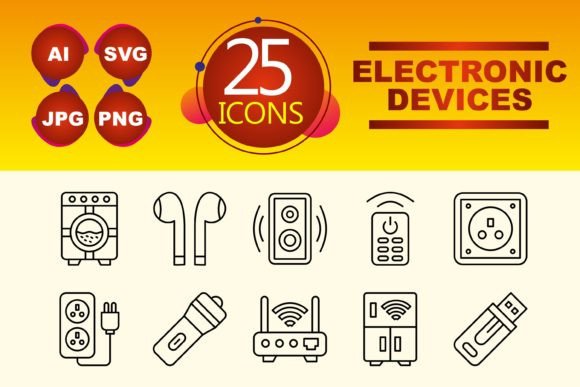
This set of Electronic Devices icons addresses that precise need. Offering ten distinct line icons, it provides a curated vocabulary of common hardware. The line icon style, characterized by clean outlines and absence of fill, is particularly suited to modern digital design. It lends a light, uncluttered feel that integrates seamlessly into sophisticated UI designs, corporate presentations, and educational infographics. Their simplicity ensures they remain legible even at small sizes on mobile app interfaces, while their geometric purity makes them a versatile asset for any creative project.
Practical Assets for Modern Creative Workflows
For the entrepreneur building a website for a tech repair service, the marketer crafting a social media campaign about new gadget releases, or the educator preparing a slide deck on digital literacy, these icons offer immediate utility. Instead of searching for disparate images or commissioning custom designs, they have a ready-made, professionally styled set. The included file formats—AI, JPG, PNG, and SVG—are deliberately chosen to support the entire spectrum of contemporary production.
The SVG (Scalable Vector Graphic) format is a standout feature for web and app developers. As a vector file, it allows icons to scale to any resolution without losing quality, ensuring crisp displays on high-DPI screens and responsive websites. The AI file grants graphic designers full editorial control within Adobe Illustrator, enabling color changes, weight adjustments, or integration into complex illustrations. Meanwhile, the PNG and JPG raster files provide quick, easy-to-use assets for environments like presentation software or basic image editing tools.
From Generic Symbols to Context-Specific Design
The evolution of icons for Electronic Devices mirrors the evolution of the devices themselves. Early icons were often detailed, attempting to replicate the look of specific models. Today, the approach is more abstract and essential. A successful icon captures the *idea* of a tablet, a router, or a smartwatch, not a particular brand's version. This shift towards conceptual representation ensures longevity and broad applicability. Our set embraces this philosophy, offering icons that are recognizable yet not tied to fleeting product designs.
This conceptual approach also allows the icons to serve multiple purposes. A line icon of a desktop monitor might represent a "desktop version" of a website, signify "display settings," or simply denote computer hardware in an infographic about office equipment. Their meaning is defined by the context the creator provides, making them powerful, flexible tools. This flexibility is vital for businesses and creators who need to communicate complex tech-related services—from cloud storage (symbolized by a server icon) to mobile compatibility (represented by a smartphone icon)—in an intuitive visual manner.
Integrating Device Icons into User-Centered Design
The practical implication of using a dedicated icon set is a significant boost in production efficiency and design consistency. For a UI/UX designer prototyping a mobile app, having these ten core Electronic Devices icons in a consistent line style means interface elements can be assembled rapidly, with a guaranteed visual harmony. For a freelancer creating templates for clients, these assets become a reusable resource that elevates the professionalism of every deliverable.
Consider a real-world example: a blogger writing about optimizing home entertainment systems. An article filled with text alone can feel dense. By strategically placing line icons of a TV, speaker, and gaming console within the content or in accompanying infographics, the blogger enhances reader engagement, breaks up textual walls, and visually anchors key topics. The icons act as cognitive landmarks, making the information more digestible and memorable. Similarly, a business owner creating a "Services" page for their website can use icons of a laptop and phone to visually segment and label offerings for "remote support" and "on-site repair," creating an immediate visual hierarchy that improves user navigation.
Why File Format Diversity Matters for Creators
The inclusion of multiple file types in this Electronic Devices icon set is not an incidental feature; it is a core consideration for practical utility. Each format serves a distinct purpose in the modern creator's toolkit:
- AI (Adobe Illustrator): This is the source file. For any serious graphic design work, customization is key. The AI file allows designers to modify stroke weights, break apart elements for unique compositions, or match the icons exactly to a brand's color palette.
- SVG: Essential for web development. SVGs are code-based, making them lightweight for website performance and infinitely scalable. They can be styled with CSS, allowing developers to change color dynamically or add animation, perfect for interactive website elements or apps.
- PNG: Offers transparency support. This is crucial for overlaying icons onto varied backgrounds in presentations, video editing, or social media graphics without a white bounding box. The PNG format provides a ready-to-use, high-quality raster image.
- JPG: A universally compatible format. While lacking transparency, the JPG is ideal for quick insertions into documents, basic slides, or environments where file format support is limited, ensuring accessibility for all users.
This multi-format approach empowers the user, whether they are a hobbyist using simple software or a professional in a high-end design suite, to implement the icons immediately and effectively.
Building a Cohesive Visual Narrative
Ultimately, icons are storytelling elements. A set of Electronic Devices icons in a unified line style helps creators build a consistent visual narrative across their entire project. From the first screen of a mobile app to the last slide of a pitch deck, these icons establish a tone of clarity, modernity, and technological understanding. They signal to the audience that the creator has attended to the details of presentation and usability.
As our interaction with technology continues to deepen, the visual symbols we use to represent that technology must evolve in clarity and purpose. This curated set of ten Electronic Devices line icons is more than a collection of graphics; it is a practical design toolset engineered for efficiency and communication. It supports the realistic needs of today's creators, allowing them to focus on their core message or functionality, while the icons work silently in the background to make that message clearer, more engaging, and visually refined.