The Intergenerational Gift: Illustrating Quranic Learning in Muslim Families
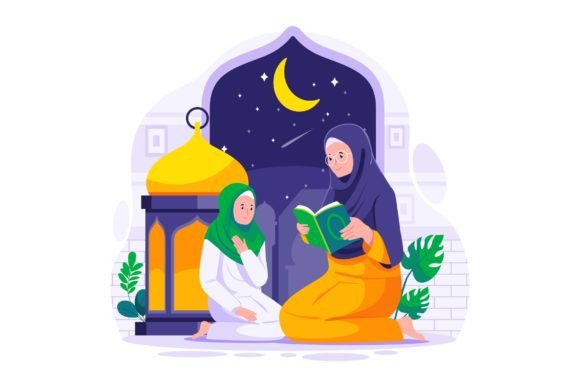
Within the rich tapestry of Islamic tradition, the act of reading and understanding the Quran stands as a central pillar of faith and practice. This spiritual endeavor is profoundly deepened when it becomes a shared family experience, particularly during sacred times like Ramadan. The visual concept of a Muslim Family Reading Quran Illustration captures this essence—a moment where a mother gently guides her daughter through the sacred text. Such imagery is not merely artistic; it serves as a powerful symbol of knowledge transmission, familial bonds, and devotional practice. For designers, marketers, educators, and content creators, these illustrations offer versatile and deeply resonant visual tools.
The Core Narrative and Cultural Significance
An illustration depicting a Muslim mother teaching her daughter to read the Quran is laden with narrative and cultural weight. It visualizes the concept of tarbiyah—the nurturing upbringing and education of children within Islamic values. The scene is often set in the home, a space of intimacy and safety, highlighting that religious learning begins in the family unit. The presence of a Quran, often held carefully and reverently, anchors the image in authenticity.
The context of Ramadan amplifies this significance. Ramadan Kareem, the holy month of fasting, prayer, and reflection, is a time when many Muslim families dedicate extra time to communal Quranic recitation and study. An illustration framed within this period speaks to themes of spiritual renewal, communal solidarity, and the pursuit of piety. The subsequent celebration of Eid Mubarak, marking the end of Ramadan, is a festival often preceded by this deepened engagement with the scripture. Therefore, a design that bridges Ramadan Kareem and Eid Mubarak concepts can tell a continuous story of spiritual journey and joyous culmination.
Key Characteristics of Effective Illustrations
To communicate these themes effectively, certain characteristics are commonly observed in successful illustrations of this genre.
- Authenticity in Representation: Attention to cultural details, such as modest attire, the respectful handling of the Quran, and familial interaction that reflects warmth and focus, is crucial.
- Emotional Tone: The imagery should convey serenity, concentration, and love rather than rigid formality. The connection between the parent and child is central.
- Clarity of Subject: The primary action—teaching, reading, listening—should be immediately understandable, making the illustration effective for a broad audience.
- Adaptable Style: A flat design style or clean vector art, as mentioned in the provided description, offers scalability and easy customization, which is vital for practical application across media.
Practical Applications and Use Cases
The utility of a well-crafted Muslim family Quran reading illustration extends far beyond mere decoration. Its relevance across multiple platforms stems from its ability to evoke universal themes of learning, heritage, and devotion.
Digital and Print Media Integration
For Desktop and Mobile Web projects, such an illustration can serve as a compelling hero image or banner. It establishes an immediate emotional connection on a landing page for educational platforms, community organizations, or Islamic charitable foundations. Its calming and positive visuals can enhance user experience and engagement.
In Infographics or educational content, the illustration can be used as a central visual anchor in materials explaining the importance of Quranic education, family roles in Islamic practice, or the observances of Ramadan. It breaks textual monotony and provides a relatable human element to informational data.
The high-resolution file formats like PNG 300 DPI and JPG 300 DPI ensure quality reproduction in print media for banners, brochures, magazine articles, or educational posters in schools and community centers.
Design and Customization Flexibility
The inclusion of vector file formats like AI, EPS 10, and SVG is a significant advantage for professionals. Compatibility with Adobe Illustrator and other vector software means the design is not a static image. Designers can:
- Adjust colors to match existing brand or project palettes.
- Isolate elements, such as the Quran or the figures, for use in composite designs.
- Resize the artwork infinitely without loss of quality, from a large billboard to a small mobile icon.
- Integrate the illustration with text, logos, or other graphical elements for specific campaigns, such as Ramadan greetings or Eid Mubarak invitations.
This easy to edit and customize nature transforms a single illustration asset into a versatile toolkit for diverse visual communication needs.
Audience Relevance and Real-World Impact
The broad audience for this type of visual content finds value in its application for different objectives.
Educators and Researchers might use it in presentations or publications to visually represent the socio-cultural context of Islamic literacy and family dynamics. Business Owners, particularly those in markets serving Muslim communities, can utilize these illustrations in respectful and culturally attuned marketing during Ramadan and Eid, fostering brand connection. Content Creators and Hobbyists may find the artwork perfect for personal projects, community newsletters, or social media content that aims to share positive aspects of Islamic culture.
For the general consumer or community member, encountering this illustration on a website or poster can serve as a point of recognition and affirmation, reflecting their own values and practices. It acts as a visual bridge, making cultural and religious concepts accessible to outsiders while resonating deeply with insiders.
Considerations for Ethical and Effective Use
While the illustration is a powerful tool, its use requires consideration. Authenticity and respect are paramount. It should not be used in contexts that contradict the values it represents or in a manner that is purely commercial without cultural sensitivity. Understanding the narrative it carries—one of education, devotion, and family—guides its appropriate placement. Furthermore, leveraging the Ramadan and Eid Mubarak aspect requires timing awareness; using such imagery aligns naturally with the lunar calendar of these events.
The Illustration as a Modern Cultural Asset
In a digitally connected world, visual storytelling is a primary mode of communication. A Muslim Family Reading Quran Illustration does more than depict a scene; it participates in a larger narrative about Muslim life. It counters monolithic representations by showcasing a specific, intimate, and positive practice. It highlights the role of women as educators and the importance of childhood religious education. By being available in versatile, high-quality, editable formats, it empowers a wide range of users to incorporate this authentic narrative into their own storytelling—whether for education, community building, or respectful marketing.
The described features, including flat design and vector compatibility, ensure it is not a relic but a modern, adaptable asset. This aligns perfectly with current design trends that value clarity, scalability, and cross-platform functionality. The artwork becomes a bridge between a rich traditional practice and contemporary digital expression.
Ultimately, such an illustration captures a timeless moment: the passing of light from one generation to the next. Whether it serves as the central visual on a landing page explaining Ramadan practices, a warm image on an Eid Mubarak greeting banner, or a supportive element in an infographic about global Muslim traditions, its core value remains. It visualizes a universal human experience—teaching, learning, and sharing what is most cherished within the framework of a particular faith and culture. For anyone seeking to communicate these themes with depth, authenticity, and visual impact, this category of illustration offers a profoundly useful and effective resource.